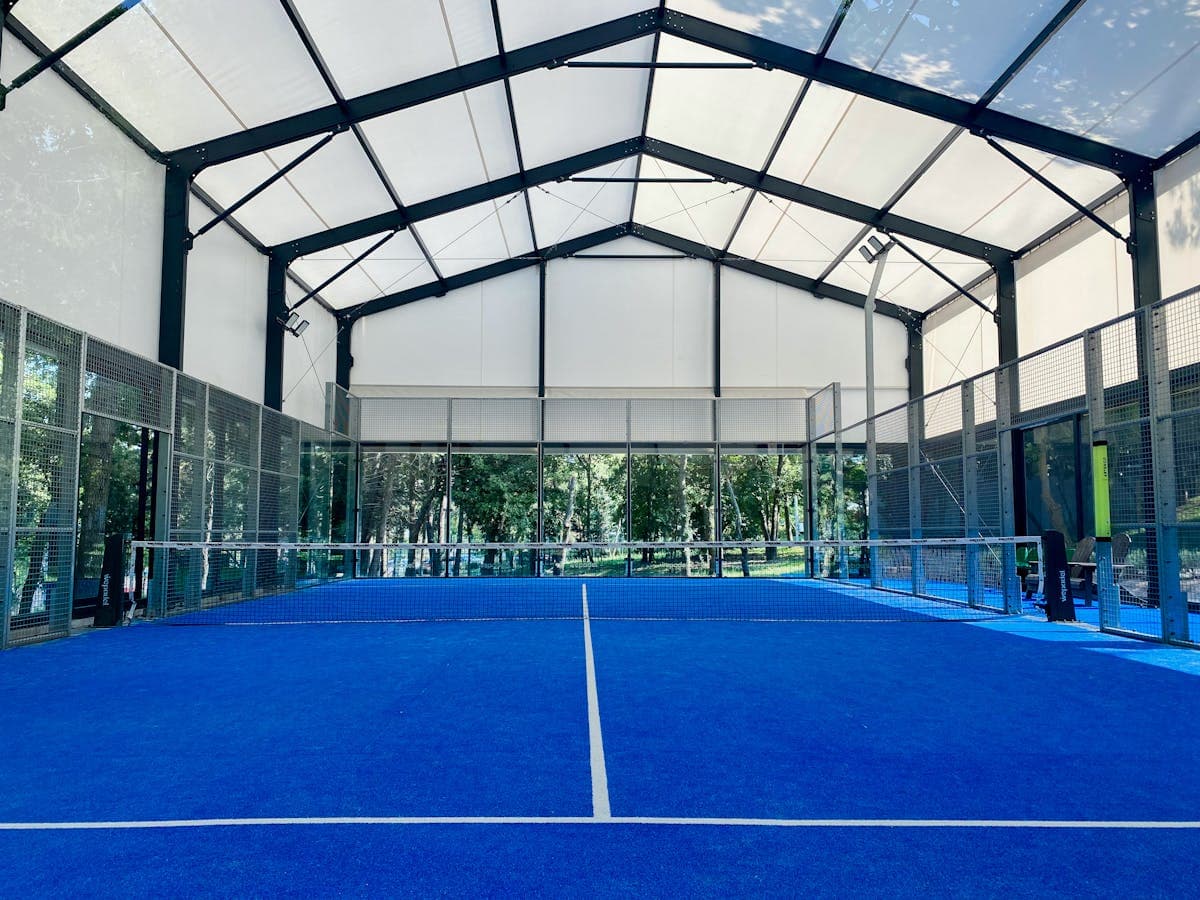
The US padel market is booming — court demand far outpaces supply in nearly every major metro. Whether you're a club owner looking to expand, a real estate developer eyeing a new asset class, or an entrepreneur who sees the opportunity, building padel courts is one of the most compelling investments in American sports infrastructure right now.
But how much does it actually cost? What goes into the build? And how long until you see a return? This guide breaks down every line item, from the glass walls to the turf, so you can plan with confidence.
💰 Quick Cost Overview
Single Court
$40K–$80K
- • Outdoor installation
- • Standard materials
- • Basic lighting
- • Excludes land costs
- • 4–8 week build time
4-Court Facility
$200K–$500K
- • Outdoor or covered
- • Premium materials
- • LED lighting system
- • Basic amenities
- • 3–6 month build time
Indoor Club
$800K–$2M+
- • 6–10 courts
- • Full HVAC system
- • Pro shop & lounge
- • Locker rooms
- • 6–12 month build time
"The cost per court drops significantly when you build multiple courts at once. Going from 1 to 4 courts doesn't 4x your costs — shared infrastructure like lighting, fencing, and site prep brings the per-court price down 20–30%."
🧱 Materials Breakdown: What Goes Into a Court
A regulation padel court is 20m × 10m (approximately 66ft × 33ft), enclosed by a combination of glass walls and metallic mesh. Here's what each component costs:
🪟 Glass Walls — $8,000–$18,000
The back walls and side returns use 10–12mm tempered glass panels. This is the single most expensive material component. Tempered glass is mandatory — it shatters into small, safe pieces on impact rather than dangerous shards. Premium courts use laminated tempered glass for even greater durability. Expect 16–20 panels per court depending on configuration.
🔩 Steel Structure & Mesh — $6,000–$12,000
The galvanized steel frame supports the glass and mesh walls. The upper portions of the side and back walls use welded metallic mesh that allows ball rebound. Quality steel framing is critical for structural integrity and longevity — don't cheap out here. Hot-dip galvanized steel resists rust and can last 20+ years with minimal maintenance.
🌿 Artificial Turf — $5,000–$10,000
Padel uses specialized artificial grass — typically 10–15mm pile height with silica sand infill. The turf needs to provide consistent ball bounce, good traction, and drainage. FIP-approved turf (Federation International de Padel) is recommended for competitive play. Turf typically lasts 5–8 years before needing replacement depending on usage and climate.
💡 Lighting — $3,000–$8,000
LED floodlighting is the standard — aim for 400–500 lux at court level for recreational play, or 600+ lux for competition. LED systems consume 60–70% less energy than traditional metal halide and last 50,000+ hours. Proper light placement (typically 4–6 fixtures per court, mounted on poles or structure) eliminates shadows and glare for players.
🏗️ Foundation & Site Prep — $5,000–$15,000
You need a flat, properly drained concrete slab — typically 4–6 inches of reinforced concrete with adequate drainage underneath. Site preparation includes grading, excavation, and potentially soil stabilization. This is where costs vary most based on your terrain and location. Rocky or sloped sites can push foundation costs significantly higher.
📋 Permits & Engineering — $2,000–$8,000
Building permits, structural engineering plans, and inspections. Costs vary widely by municipality. Some areas require environmental impact studies, noise assessments (especially for residential areas), or special zoning approval for recreational structures. Budget 3–6 months for the permitting process in most US cities.
🏠 Indoor vs Outdoor: Which Makes Sense?
📊 Comparison
The sweet spot for most US markets? Covered outdoor courts — a roof structure without full walls. This protects from rain and direct sun while keeping construction costs 40–50% below full indoor builds. In year-round warm climates like Miami, LA, and Phoenix, uncovered outdoor courts can work great. In the Northeast or Midwest, indoor facilities command premium pricing and stay booked through winter.
🏆 Top Court Builders
Padelcreations
US-Based • Full ServiceOne of the leading padel court builders operating in the US market. They handle everything from design and permitting to installation and post-build support. Known for high-quality panoramic courts and fast turnaround times. Great option if you want a single point of contact for the entire project.
Mondo
Global • Premium QualityItalian company with decades of experience in sports surfaces and court construction. Mondo builds courts for professional tournaments and high-end clubs worldwide. Their courts meet the strictest FIP and Premier Padel standards. Premium pricing, but unmatched build quality and materials.
Manzasport
Spain-Based • Value LeaderSpanish manufacturer with extensive experience building courts across Europe, the Middle East, and now the US. Manzasport offers excellent value — their courts are FIP-approved and widely used in competitive settings. They offer both standard and panoramic (full-glass) configurations.
📈 ROI Analysis: When Do You Break Even?
Let's run the numbers on a typical 4-court outdoor facility:
💵 Revenue Model (4 Courts)
📊 Expense Model (Annual)
Bottom line: A well-run 4-court facility can generate $250K–$650K in annual profit before debt service. With a total build investment of $200K–$500K, most operators see a full return on investment within 18–36 months. That's an exceptionally fast payback period compared to most sports facility investments.
"Padel courts have the best revenue-per-square-foot of any racquet sport facility. A single padel court generates 2–3x the hourly revenue of a tennis court in the same footprint."
✅ Tips Before You Build
1. Start with market research
How many padel players are within a 20-minute drive? Are existing courts consistently booked? Talk to local tennis and pickleball facilities — their waitlists are your opportunity. A market with even 500 active padel players can support a 4-court facility.
2. Plan for at least 4 courts
A single court is great for a private residence, but it's not a viable business. Four courts is the minimum for a self-sustaining operation — it allows you to run leagues, clinics, and open play simultaneously while keeping the schedule flexible.
3. Don't forget the amenities
Restrooms, a small lounge or viewing area, and parking are essentials. A pro shop and café/bar can become significant revenue streams. Budget an additional $50K–$150K for basic amenities beyond the courts themselves.
4. Get FIP-certified courts
FIP certification ensures your courts meet international standards for dimensions, materials, and ball rebound. It's not just a badge — it means you can host sanctioned tournaments, which brings prestige, press, and players to your facility.
Thinking About Building?
The padel construction market in the US is still early — there's a massive first-mover advantage in most cities. Do your homework, crunch the numbers, and move fast.