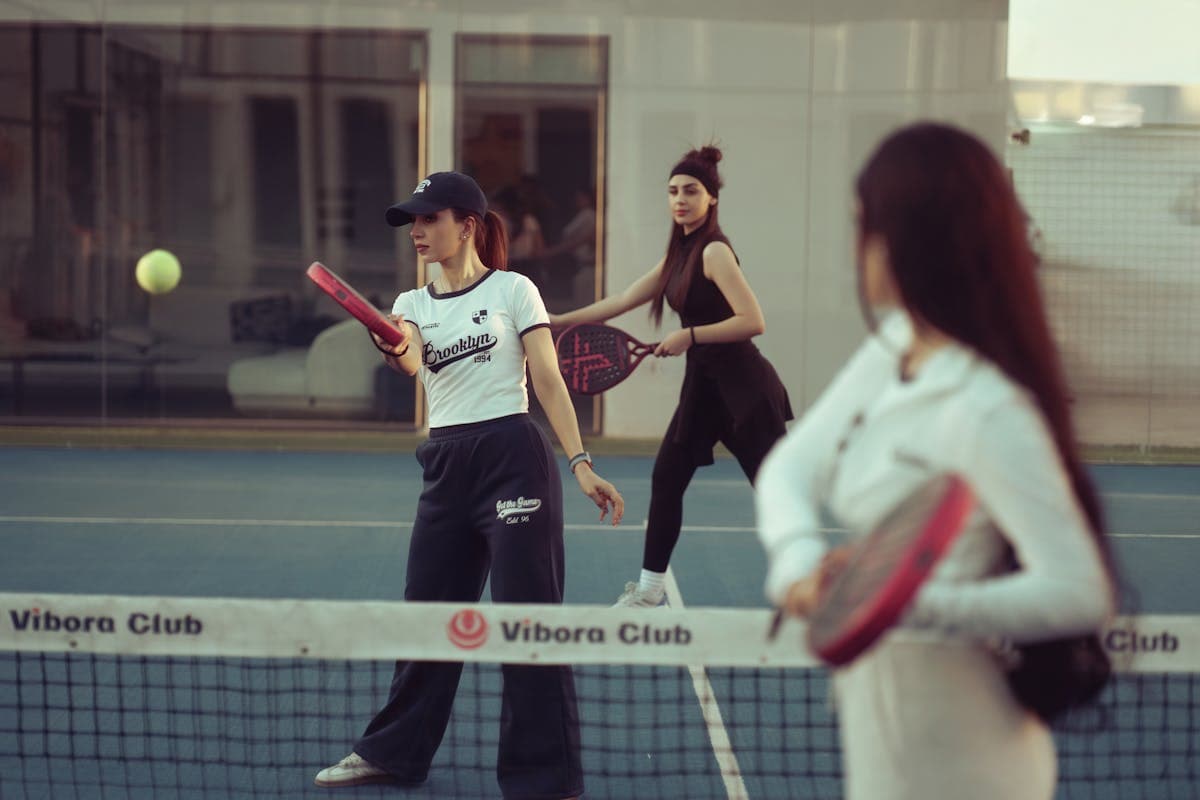
"So it's basically tennis, right?" If you've ever mentioned padel to someone who hasn't played it, you've heard this question. And while padel and tennis share some DNA — the scoring system, the net, the general concept of hitting a ball back and forth — they're actually very different sports.
Whether you're a tennis player curious about padel, a padel player tired of explaining the difference, or someone who's never played either — here are the 10 key differences that make each sport unique.
Court Size
🎾 Padel
20m × 10m (66ft × 33ft). About one-third the size of a tennis court. Enclosed by glass walls and metallic mesh.
🎾 Tennis
23.8m × 10.97m for doubles (78ft × 36ft). Open court with no walls. Way more ground to cover.
Why it matters: The smaller padel court means less running, shorter rallies to reach, and a more intimate playing experience.
Walls — The Game Changer
🎾 Padel
Glass walls surround the court and the ball can bounce off them and stay in play. You can play shots off the back wall, side walls, even hit the ball out and over the back wall (the "bajada"). This creates wild, unpredictable rallies.
🎾 Tennis
No walls. If the ball goes past you, it's gone. Fences are just for keeping balls in the area — they're not part of the game.
Why it matters: Walls are what make padel unique. They extend rallies, reward creativity, and add a whole dimension that tennis doesn't have.
The Serve
🎾 Padel
Underhand only. You bounce the ball and hit it below waist height. No overhead serving allowed. This levels the playing field massively.
🎾 Tennis
Overhead serve. Top pros serve at 130+ mph. The serve is arguably the most important shot in tennis and takes years to master.
Why it matters: The underhand serve means beginners can start rallying immediately. No one gets aced on their first day of padel.
The Racket
🎾 Padel
Solid face, no strings. Shorter handle, perforated surface for air flow. Weighs 340–380g. Attached to your wrist with a leash. Much easier to control than a tennis racket.
🎾 Tennis
Strung racket with a larger head and longer handle. Weighs 280–340g. Generates more power and spin, but requires more technique to control.
Why it matters: The solid padel racket has a bigger sweet spot and is more forgiving. You'll mis-hit less on day one.
Scoring
🎾 Padel
Same as tennis: 15-30-40-game, 6 games per set, best of 3 sets. But many tournaments use the "golden point" at deuce — one sudden-death point instead of advantage. Keeps matches moving.
🎾 Tennis
15-30-40-game with advantage at deuce. Men's Grand Slams play best of 5 sets. Matches can last 3-5 hours.
Why it matters: The golden point keeps padel matches shorter and more intense. Most matches finish in 60-90 minutes.
Doubles Only
🎾 Padel
Always 4 players. Padel is exclusively doubles. There's no singles format. You always have a partner — teamwork, communication, and coordination are key.
🎾 Tennis
Singles and doubles. Most recreational players play singles. The individual nature of tennis means it can feel more isolating.
Why it matters: The doubles-only format is why padel is so social. You're always interacting with 3 other people on court.
Net Play & Volleys
🎾 Padel
Net play dominates. The winning position is at the net. Players constantly move forward and back — net position = control. Volleys, smashes, and "bandeja" (tray) shots are essential.
🎾 Tennis
Modern tennis is dominated by baseline play. Players like Djokovic and Nadal rally from the back. Net play exists but is less central to the game than in padel.
Why it matters: If you love quick-reflex net exchanges and smashes, padel delivers more of that per match than tennis.
Learning Curve
🎾 Padel
Easier to start, faster to enjoy. Most beginners can rally within 20 minutes. The underhand serve, solid racket, and walls keeping the ball in play mean you feel competent quickly.
🎾 Tennis
Steeper learning curve but higher skill ceiling. Tennis takes longer to enjoy (the serve alone can take months), but the individual skill development is deeper. Decades of technique to master.
Why it matters: Padel is the best racket sport for beginners. Tennis rewards years of dedication. Both are worth playing.
Social Factor
🎾 Padel
Built for socializing. Four players on a small court, constant interaction, post-match drinks culture. Padel clubs often have lounges, bars, and a community vibe. You'll make friends fast.
🎾 Tennis
Can be social (doubles, club events) but singles tennis is inherently solo. You're across the net from one opponent with 78 feet between you. Less natural conversation during play.
Why it matters: In Spain and Argentina, padel is as much a social activity as a sport. People play for the community as much as the exercise.
Cost
🎾 Padel
Courts are cheaper to build (~$50-80K vs $100K+ for tennis). Court rental is typically $40-60/hour split 4 ways = $10-15 per person. Rackets cost $50-200. No stringing costs.
🎾 Tennis
Court fees vary widely ($0 at public parks to $50+/hour at clubs). Rackets cost $100-300+. Re-stringing every few months ($20-50). Club memberships can be expensive.
Why it matters: Padel is generally more affordable per session, especially when you split the court 4 ways.
🤔 So Which Should You Play?
Honestly? Both.They're different sports that scratch different itches. Tennis is a deep, individual pursuit with a century of tradition. Padel is a social, accessible blast that you can enjoy from day one.
But if you're starting from scratch and just want to have fun as quickly as possible — start with padel. The lower barrier to entry means you'll be playing real rallies within your first session. You'll meet people (doubles only, remember), get great exercise, and probably get hooked.
Many of the best padel players in the world started as tennis players. The skills transfer beautifully in both directions. So don't think of it as an either/or — think of it as expanding your racket sports portfolio. 🎾
"I played tennis for 20 years before trying padel. Within a month, I was playing padel 3 times a week. I still love tennis, but padel is just... more fun with friends." — Every tennis player who tries padel
Ready to Try Padel? 🎾
Now that you know the differences, it's time to experience them firsthand. Check out our beginner resources or find a court near you.